

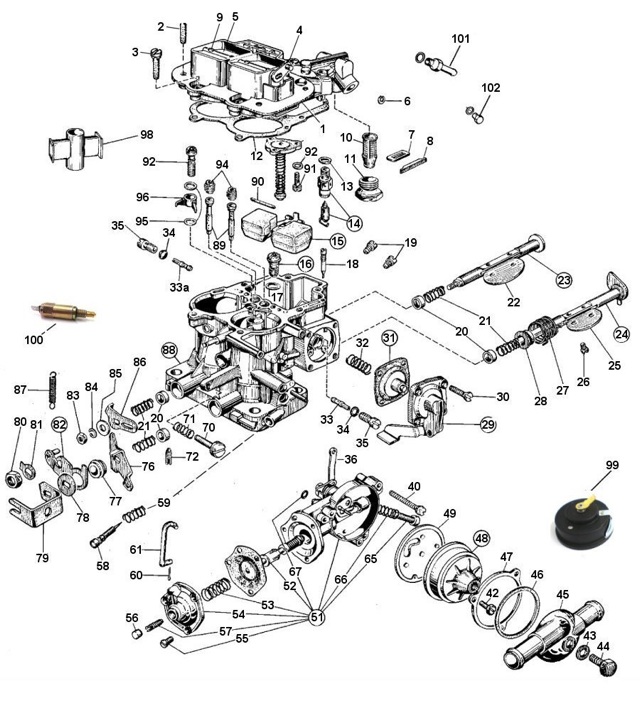
Figure 1: Weber 32/36 DGV DGEV DGAV Parts Diagram
| Item | Qty | Type | Description | Part # | New Part # |
|---|---|---|---|---|---|
| 0 | 1 | 32/36 DGAV | Complete New Weber Carburetor Electric Choke |
22680.033B | |
| 0 | 1 | 32/36 DGAV | Complete New Weber Carburetor Water Choke |
22680.051B | |
| 1 | 1 | 32/36 DGEV/AV | Carburetor Cover Assy top | 3236top | |
| 2 | 4 | 32/36 DGEV/AV | - Stud Bolt | 64955.111 | |
| 3 | 6 | 32/36 DGEV/AV | Carb. Cover Fixing Screw | 64700.001 | |
| 4 | 1 | 32/36 DGEV/AV | Choke Shaft & Lever Assy | 10020.221 | |
| 5 | 2 | 32/36 DGEV/AV | Starting Throttle Valve | 64010.007 | |
| 6 | 1 | 32/36 DGEV/AV | Spring Ring | 10140.501 | |
| 7 | 1 | 32/36 DGEV/AV | Dust Seal Plate | 52135.018 | |
| 8 | 1 | 32/36 DGEV/AV | Dust Seal Plug | 61070.002 | |
| 9 | 4 | 32/36 DGEV/AV | Choke Plates Fixing Screw | 64525.003 | |
| 10 | 1 | 32/36 DGEV/AV | Strainer Assy | 37022.003 | 37022.010 |
| 11 | 1 | 32/36 DGEV/AV | Strainer Inspection Plug | 61002.018 | |
| 12 | 1 | 32/36 DGEV/AV | Carb. Cover Gasket | 41705.035 | 41705.080 |
| 13 | 1 | 32/36 DGEV/AV | Needle Valve Gasket | 41535.015 | |
| 14 | 1 | 32/36 DGEV/AV | Needle Valve Assy | 79516(1) | |
| 15 | 1 | 32/36 DGEV/AV | Float Assy | 41030.020 | |
| 16 | 1 | 32/36 DGEV/AV | Full Power Needle Valve Assy | 64235.016 | |
| 17 | 1 | 32/36 DGEV/AV | Power Valve Gasket | 41530.013 | |
| 18 | 1 | 32/36 DGEV/AV | Pump Discharge Blanking Needle | 64900.001 | |
| 19 | 1 | 32/36 DGEV/AV | Primary Main Jet | 73801(1) | |
| 19a | 1 | 32/36 DGEV/AV | Secondary Main Jet | 73801(1) | |
| 20 | 4 | 32/36 DGEV/AV | Shaft Retaining Bush | 12750.085 | |
| 21 | 4 | 32/36 DGEV/AV | Bush Retaining Spring | 47600.027 | |
| 22 | 1 | 32/36 DGEV/AV | Secondary Throttle Valve | 64005.034 | |
| 23 | 1 | 32/36 DGEV/AV | Secondary Shaft Assy | 10015.492 | |
| 24 | 1 | 32/36 DGEV/AV | Primary Shaft Assy | 10015.493 | |
| 25 | 1 | 32/36 DGEV/AV | Primary Throttle Valve | 64005.090 | |
| 26 | 4 | 32/36 DGEV/AV | Throttle Plates Fixing Screw | 64520.023 | |
| 27 | 1 | 32/36 DGEV/AV | Shaft Return Spring | 47610.079 | |
| 28 | 1 | 32/36 DGEV/AV | Spacer | 12765.047 | |
| 29 | 1 | 32/36 DGEV/AV | Accel. Pump Cover Assy | 32486.037 | |
| 30 | 4 | 32/36 DGEV/AV | Pump Cover Fixing Screw | 64700.006 | |
| 31 | 1 | 32/36 DGEV/AV | Accel. Pump Diaphragm Assy | 47407.048 | 47407.355 |
| 32 | 1 | 32/36 DGEV/AV | Pump Loading Spring | 47600.092 | |
| 33 | 1 | 32/36 DGEV/AV | Primary Idle Jet | 74403(1) | |
| 33a | 1 | 32/36 DGEV/AV | Secondary Idle Jet | 74403(1) | |
| 34 | 2 | 32/36 DGEV/AV | Oring for Idling Jet Holder Small | 41565.002 | |
| 35 | 2 | 32/36 DGEV/AV | Idling Jet Holder Small 1/8inch Jets | 52570.006 | |
| 35 | 2 | 32/36 DGEV/AV | Idling Jet Holder Big | 52570.011 | |
| 36 | 1 | 32/36 DGEV/AV | Choke Control Lever Assy | 45034.090 | |
| 37 | 1 | 32/36 DGEV/AV | Spring for Fast Idle Cam | 47610.080 | |
| 38 | 1 | 32/36 DGEV/AV | Spring Retaining Cover | 58000.018 | |
| 39 | 1 | 32/36 DGEV/AV | Washer for Shaft | 55555.029 | |
| 40 | 3 | 32/36 DGEV/AV | Choke Fixing Screw | 64700.008 | |
| 41 | 1 | 32/36 DGEV/AV | Auto Choke Shaft & Lever Assy | 10085.033 | |
| 42 | 3 | 32/36 DGEV/AV | Plate Screw | 64615.005 | |
| 43 | 1 | 32/36 DGEV/AV | Washer for Water Cover Fixing Screw | 41530.002 | |
| 44 | 1 | 32/36 DGEV/AV | Water Cover Fixing Screw | 64610.006 | |
| 45 | 1 | 32/36 DGEV/AV | Auto Choke Water Chamber Seat Gasket | 32444.005 | |
| 46 | 1 | 32/36 DGEV/AV | Water Chamber Seat Gasket | 41555.001 | |
| 47 | 1 | 32/36 DGEV/AV | Thermostat Assy Locking Ring | 52135.006 | |
| 48 | 1 | 32/36 DGEV/AV | Auto Choke Thermostat Assy | 57804.079 | |
| 49 | 1 | 32/36 DGEV/AV | Gasket for Auto Choke Body | 41640.005 | |
| 50 | 1 | 32/36 DGEV/AV | Plate for Choke Shaft | 52130.012 | |
| 51 | 1 | 32/36 DGEV/AV | Auto Choke Body Assy | 3236ck | |
| 52 | 1 | 32/36 DGEV/AV | Choke Diaphragm Assy | 47407.056 | |
| 53 | 1 | 32/36 DGEV/AV | Diaphragm Loading Spring | 47600.141 | |
| 54 | 1 | 32/36 DGEV/AV | Auto Choke Cover | 32384.020 | |
| 55 | 3 | 32/36 DGEV/AV | Auto Choke Cover Fixing Screw | 64700.007 | |
| 56 | 1 | 32/36 DGEV/AV | Screw Plug | 61015.003 | |
| 57 | 1 | 32/36 DGEV/AV | Diaphragm Adjusting Screw | 64595.005 | |
| 58 | 1 | 32/36 DGEV/AV | Idle Adjusting Screw | 64750.025 | |
| 59 | 1 | 32/36 DGEV/AV | Spring for Idle Adjusting Screw | 47600.007 | |
| 60 | 1 | 32/36 DGEV/AV | Split Pin | 32610.005 | |
| 61 | 1 | 32/36 DGEV/AV | Fast Idling Control Rod | 61280.082 | |
| 62 | 1 | 32/36 DGEV/AV | Washer for Loose Lever | 55510.003 | |
| 63 | 1 | 32/36 DGEV/AV | Fast Idling Loose Lever Assy, Including | 45041.053 | |
| 64 | 1 | 32/36 DGEV/AV | - Lever | 45039.056 | |
| 65 | 1 | 32/36 DGEV/AV | - Screw | 64590.004 | |
| 66 | 1 | 32/36 DGEV/AV | - Spring | 47600.007 | |
| 67 | 1 | 32/36 DGEV/AV | Auto Choke 'O' Ring Seal | 41565.008 | |
| 68 | 1 | 32/36 DGEV/AV | Spring Washer | 55525.003 | |
| 69 | 1 | 32/36 DGEV/AV | Throttle Shaft Fixing Nut | 34715.016 | |
| 70 | 1 | 32/36 DGEV/AV | Primary Throttle Adjusting Screw | 64625.017 | |
| 71 | 1 | 32/36 DGEV/AV | Spring for Throttle Adjusting Screw | 47600.007 | |
| 72 | 1 | 32/36 DGEV/AV | Secondary Throttle Adjusting Screw | 64595.005 | |
| 73 | 1 | 32/36 DGEV/AV | Wave-Washer for Loose Lever | 55530.005 | |
| 74 | 1 | 32/36 DGEV/AV | Bushing for Loose Lever | 12765.042 | |
| 75 | 1 | 32/36 DGEV/AV | Loose Lever Fixing Screw | 64700.014 | |
| 76 | 1 | 32/36 DGEV/AV | Primary Throttle Control Lever | 45046.016 | |
| 77 | 1 | 32/36 DGEV/AV | Bushing for Loose Lever | 12765.002 | |
| 78 | 1 | 32/36 DGEV/AV | Washer for Loose Lever | 55510.061 | |
| 79 | 1 | 32/36 DGEV/AV | Throttle Valve Control Lever | 45136.029 | |
| 80 | 1 | 32/36 DGEV/AV | Throttle Shaft Fixing Nut | 34715.014 | |
| 81 | 1 | 32/36 DGEV/AV | Lock Washer | 55520.002 | |
| 82 | 1 | 32/36 DGEV/AV | Loose Lever Assy | 45069.011 | |
| 83 | 1 | 32/36 DGEV/AV | Secondary Shaft Fixing Nut | 34705.001 | |
| 84 | 1 | 32/36 DGEV/AV | Spring Washer | 55525.001 | |
| 85 | 1 | 32/36 DGEV/AV | Washer for Loose Lever | 55510.046 | |
| 86 | 1 | 32/36 DGEV/AV | Secondary Throttle Control Lever | 45032.124 | |
| 87 | 1 | 32/36 DGEV/AV | Spring for Loose Lever | 47605.010 | |
| 88 | 1 | 32/36 DGEV/AV | Carburetor Body | 3236body | |
| 89 | 2 | 32/36 DGEV/AV | Emulsioning Tube | 61440(1) | |
| 90 | 1 | 32/36 DGEV/AV | Float Fixing Pin | 52000.015 | |
| 91 | 3 | 32/36 DGEV/AV | Control Valve Retaining Screw | 64700.007 | |
| 92 | 3 | 32/36 DGEV/AV | Pump delivery Screw | 64290.024 | |
| 93 | 1 | 32/36 DGEV/AV | Carb. Power Valve Assy | 57804.097 | |
| 94 | 1 | 32/36 DGEV/AV | Primary Air Corrector Jet | 77201(1) | |
| 94a | 1 | 32/36 DGEV/AV | Secondary Air Corrector Jet | 77201(1) | |
| 95 | 2 | 32/36 DGEV/AV | Pump Jet Gasket | 41530.012 | |
| 96 | 1 | 32/36 DGEV/AV | Accell Pump Jet | 76226(1) | |
| 97 | 1 | 32/36 DGEV/AV | Pump Delivery Valve Assy | 64290.017 | |
| 98 | 2 | 32/36 DGEV/AV | Auxiliary Venturi | 71111(1) | |
| 99 | 1 | 32/36 DGEV/AV | Electric Choke Element | 57804.333 | |
| 100 | 1 | 32/36 DGEV/AV | Idle Cut-Off Solenoid - .060 | 43903.060 | 43928.060 |
| 32/36 DGEV/AV | Base Gasket | 99005.068 |
Weber DGV/DGAV Idle Setting Procedure
Note: Before adjusting carburetor, be sure the engine is at operating temperature (choke fully off), air cleaner is removed, and vacuum lines are plugged off.
- The Weber DGV/DGAV idle speed screw should be adjusted to its preliminary set point before adjusting the idle mixture. To set the idle speed screw, follow these steps.
- Back "out" the idle speed screw until the tip of the screw no longer touches the throttle lever. Then slowly turn the screw in until it just comes in contact with the throttle lever.
- From the "contact" position, turn the idle screw "in" one (1) full turn.
- If a tachometer is available, install it prior to starting the engine. If a tachometer is not available set idle mixture "by ear."
- Start engine, be sure choke is not engaged, and proceed to adjust the idle mixture.
- Turn the idle mixture screw "in" (clockwise) until the engine RPM begins to fluctuate on the tachometer. (If adjusting by ear, until a noticeable drop in speed is heard.)
- Back "out" (counterclockwise) the idle mixture screw slowly, until the engine idle becomes steady. Try to obtain the leanest setting without affecting the idle speed. If necessary, repeat steps 6 and 7 until the best setting is achieved.
- Once the mixture is set, fine-tune the engine's idle speed, if necessary, by readjusting the idle speed screw. (Note: Turning "in" (clockwise) the idle speed screw will increase engine speed. Turning "out" (counterclockwise) the idle speed screw will decrease the engine speed.)
- If idle speed is reset go back and repeat steps 6 and 7.

General DGV settings for a unmodified MGB
- Idle jets of .55 or .60 and secondary of .50 (approx)
- Main jet is 140 and secondary is 135
- Air correction is 170 and 160
Weber DGV Notes
While the DGV was originally designed for 6 cylinder Fords, it is quite popular and has been fitted to many British sportscars in the aftermarket. The DGV is a dual-barrel downdraft progressive carburetor. When cruising, only the 32 mm venturi is employed, giving good economy. Under load, the second, richer 36 mm venturi opens up to supply additional fuel.
NOTE regarding the use of DGV on the MGB by Doug Jackson of British Automotive
"While a very reliable carb/manifold set up, a disadvantage with this carburetor is the fact that the primary venturi accounts for two thirds of the throttle open position (no CFM* figures are given for this position) with the secondary venturi becoming active in the final one third of throttle movement.
This carburetor requires excessive initial ignition timing advance to avoid stumble on take off (if the ignition timing was retarded, we would have to open the primary throttle plate to obtain the necessary idle; this would expose the progression bleed holes which in turn would require that the idle mixture be leaned to compensate for this richer mixture condition. The end result being very little progressive richening upon further throttle opening, especially at snap throttle and so the stumble)."





Where is the " idle mixture screw"?
Is there a key to the above picture?
SAm
• Main jet is 140 and secondary is 135
• Air correction is 170 and 160" and how do they interfere with the setup of no 56?
rekordopel
Want to leave a comment or ask the owner a question?
Sign in or register a new account — it's free